
When
I was young, reading was a self-indulgent activity. When my
sister and I were set free to roam within the library, reading meant a retreat into
familiar shelves and familiar authors. I remembered my sister and me making a list of all the books
in The Baby-sitters Club and ticking
them off one by one after we completed them. We were determined to finish every
book, a self-imposed challenge to stretch our reading abilities, but ultimately
situated within what was comfortable and predictable. The dramatic turning-point
in our reading spree occurred when my sister declared that she was borrowing Little Women in place of another book
from the Baby-sitters Club series. I
was distraught: how could you betray our sisterhood pact forged between shared
library cards! Being the younger sister, I had no say in the matter: I grudgingly
read Little Women against my will. Thankfully,
I eventually learnt that the joys of reading lie in the exploration of
imaginative possibilities, something that can only be done if the reader is
willing to test his or her personal limits.
If
my sister was the one who shoved me into the realm of unfamiliar reading territory,
the study of Literature taught me why it
was necessary, reasons that went beyond the need for personal pleasure. During
the course of my academic studies, I was obligated to read numerous books that
I was not immediately interested in. There were assigned texts I never quite
appreciated—I whined my way through pages of Eliot’s Middlemarch and Pynchon’s novels, dissatisfaction tussling with
academic obligations as I reluctantly trudged through them. Yet there were also
texts that I would never have discovered if not for set texts and module
requirements. Till now, during opportune moments, they are a constant reminder
of the necessity of reading. On mellow nights as I contemplate loss, I think of Jay Gatsby and ponder his foolishness,
and mines. On bad days when acts of kindness seem hard to come by, I think of Lord of the Flies and remember that at the
core of the human heart, there might only be cruelty and self-preservation. Yet
it is also a reassuring thought: it is a reminder that we have a choice to not
be subsumed by the darkness within us; we have to keep on fighting it to
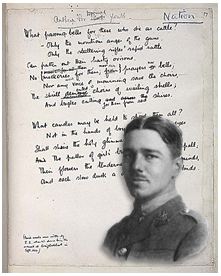
prevent it from consuming us whole. Wilfred Owen’s war poetry remains relevant
and enlightening even after the “A” levels were over. His war poetry taught me
to break down binaries of Us/Them, soldier/civilian, good/bad which are often
simplistically portrayed in newspaper reportings. His poetry is an indecent
exposure to the things we choose to avoid due to a societal dismissal of emotional,
“unobjective” journalism. His poetry is the exact opposite: it treats humans as humans and not as
statistics. I think that is one of the best things that Literature can do for
us: it is often essential to return back to Literature to recover those pieces
of “human-ness” within us, to realise that we have the capacity to be moved and
most importantly, to empathize with unfamiliar perspectives. This is especially
crucial when we are too caught up with the overwhelming burdens of life which
throws us into self-centred disarray.

Now
I intentionally seek books that are unfamiliar, books that I am not certain I
will enjoy. It is part-defiance, part-bitchiness (the more you know your enemy,
the better you can disparage it), part-curiosity. I want to experience new and
different perspectives and the only way to do so is to go in unexpected directions. It seems almost absurd, mindlessly looking for something, anything, that can fill the void in my
knowledge paradigm. But it matters to me: I want to read The Fault In Our Stars because a student once looked at me, bright-eyed and declared that she “loves romantic novels like this”. I want to read Games of Thrones because I once watched spellbound as two strangers at the dinner table waxed lyrical about the series. I want to read all of Murakami’s oeuvre mainly because
I think he is overrated; I might even read Fifty
Shades of Grey. I want to read more Chinese books, world literature
and local literature to help me think about my identity as a Chinese-Singaporean
who is still suffering the remnants of a colonial hangover (perhaps one day I
can give back cultural credit when credit is due instead of blindly following
a post-colonial aesthetic). Of course, I do have books I turn to because I am
interested in them: Iris Murdoch and her melodramatic novels about the
complications of human relationships, Virginia Woolf who spins prose like
poetry, the Western canon that I am determined to get through, the Internet
canon (“100 Books To Read Before You Die”), North Korean literature after a
visit to the country (after all, Kim Il-Sung is a “published author” in their
terms), the Bible, books about religion and philosophy, Charles Bukowksi and
Herbert Zbigniew’s poetry, feel-good picture books (to confess, mostly to look
at pictures than actually at the words) etc. etc.
I
read only because there’s so much more to read, and so much left undiscovered and
unexplored. If reading something today can help me understand the world and its complexities tomorrow, then I will continue doing
it.

Yes! I thought I was the only weirdo who read The Babysitters Club religiously! I recall finishing all the books from the series in my community library, which made me move on to the Sweet Valley series. That was my equivalent of Little Women. T.T
ReplyDeleteI also agree with you on reading Murakami simply because. Many things I read simply out of curiosity, yet sometimes I wonder if our preconceived notions would impact our potential enjoyment of the text, though it's inevitable.
I think it's really great that you are tuning yourself in to finding books that others are reading! It's true that you need to "know your enemy" first before you can fight them - especially if we are referring to books that may or may not really suit our tastes. But it's also an amazing way to find out new and interesting literature! I once went to a Waterstones and stood around the fiction section looking for a book with a female protagonist whose central conflict did not involve a man. (Because it is actually kind of difficult to find, which I hope gets rectified soon) When I told my friend about what i was trying to do, he kind of joked that I was going to end up with some kind of erotica. But I ended up finding Suzanne Rindell's The Other Typist. It's a pretty good suspense/mystery read and I'm really glad I actively pushed myself to find something I wouldn't have picked up on first instinct at the bookstore.
ReplyDeleteOn the topic of 50 Shades of Grey, however... I hope you enjoy (whether it's from serious enjoyment or ironic laughter) it because when I read it, quotes like these (link below) made my day.
http://www.digitalspy.co.uk/movies/at-the-movies/a512275/50-shades-of-grey-23-funniest-quotes-from-el-jamess-novel.html
I think someone might murder me for saying this but I agree with you that Murakami is overrated. Every time I read Murakami, I have a feeling that something is lost in translation. Someone passed me an e-copy of Fifty Shades of Grey which I tried to read and failed because there are better eroticas than this. I can pass it to you if you want.
ReplyDeleteWell, since we are on Murakumi, I do like "What I Talk about when I talk about Running" though I am not so sure about his other books. I have decorating my desk his newest "Colorless Tsukuru Tazaki" - it seemed like a worthy buy with my Popular vouchers and it is such a pretty book (frivolous), but I have yet to read it. Especially when my entire box of Amazon orders arrived on the same day. So it will sit pretty decorating my bookshelf while I read Susan Sontag's "On Photography", Palacio's "Wonder" (YA text), and various other academic texts that seem more interesting or necessary for work. But I shall get to it by the end of the year.
ReplyDeleteHello, i'd suggest Mo Yan's ouevre and Tash Aw's Five Star Billionaire if you're interested in Chinese lit.
ReplyDeleteAlso it's funny that you mention Chinese lit as helping you get over Post-colonialist aesthetic because the study of National Literature was invented precisely for that reason. Of all places, it emerged from Chinese lit or more precisely, Chinese transnational literature which is a study of the myriad experiences felt by refugrees, migrants, nationalists and etc... which developed as a reaction to the universalising thrust of PoCo. It's still a developing theory so it's not that firm yet but it's certainly very timely to understand ourselves as Chinese-Singaporeans!
Ooh I actually really love the babysitter's club too! And I really need to learn from you and start reading stuff I'm uncomfortable with. I have this tendency to just stick within my comfort zone!
ReplyDelete